


Browse the pages:
ARCHIVE
SUBSCRIBE
BUY ISSUES
BOOKS
EXHIBITS
FILMS
MUSIC
LINKS
CONTACT


COLORS – 15/69
 
15 years in 69 covers
at the National Library of Korea
from November 14 to December 9 2006
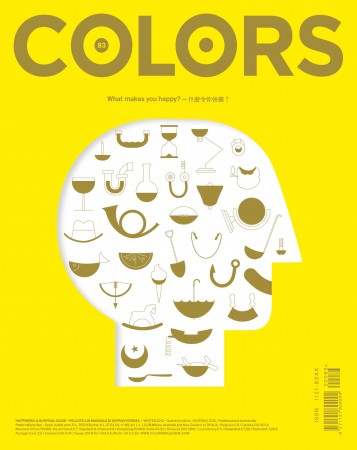
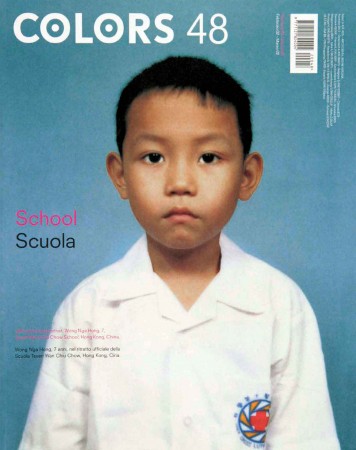
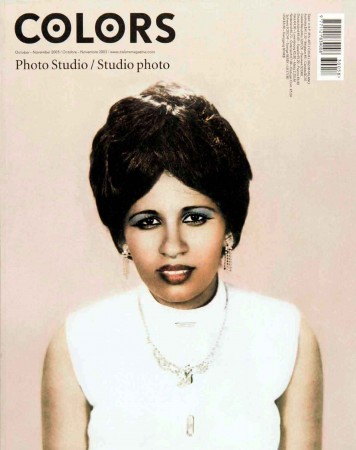
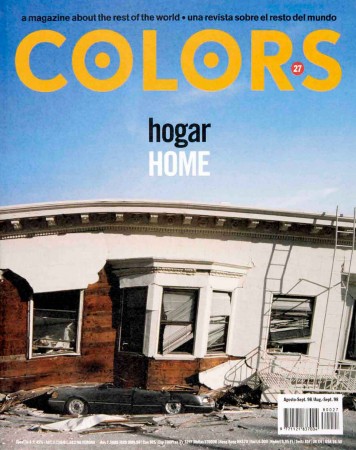
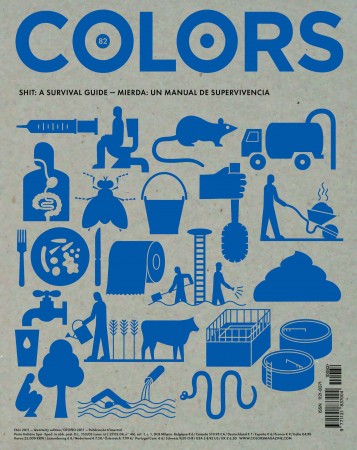
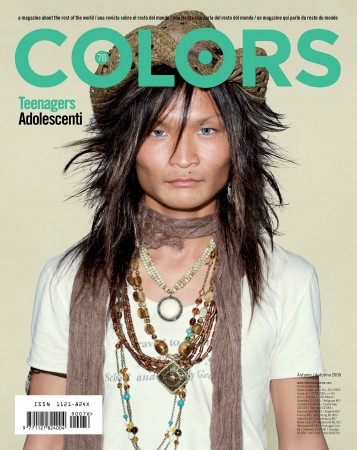
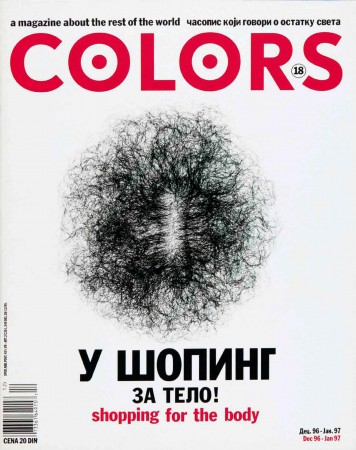
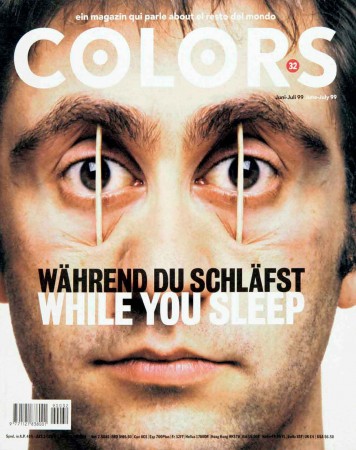
The first issue of COLORS featured a photograph of a newborn baby girl with her umbilical cord still attached to her mother. On one of the most recent issues there’s the calm, dignified face of an AIDS victim. Life and death: the whole history of COLORS is contained in these two extremes and maybe a piece of history of these past years as well. 69 covers, some ironic and fun, others harsh and shocking, that reveal the theme of an issue with a single image.

COLORS was founded in 1991, before internet (the first editorial mentions the fax machine as one of the new technologies making the planet smaller...) and nobody could have imagined that we would end up here. There was a company – and fortunately it’s still here – that had been breaking the rules of advertising for several years and had been building its image in a ground breaking way. The product had slowly disappeared from its campaigns to make room for ideas. But the ideas had become so important that it was getting more and more difficult to confine them to a poster or an advertising page. They needed a whole magazine, preferably a new and different one, that wasn’t about fashion, famous people or current affairs – a magazine that used images to talk about the world through important themes, founded around a unique, great idea: difference is a positive thing and all cultures have the same dignity. And so COLORS was born, “a magazine about the rest of the world”, where the concept of central and peripheral become relative, they merge and lose all meaning.

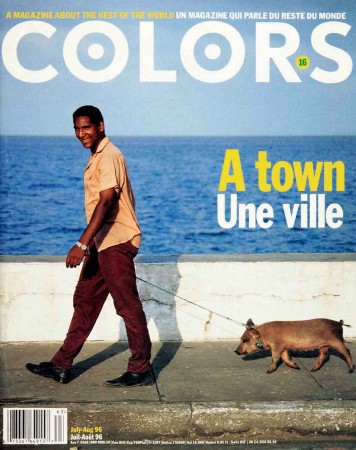
Over the past 15 years COLORS has seen many changes. Its nomadic editorial offices have moved from New York to Rome, then to Paris and Treviso – where in the interim Fabrica, the Benetton group’s communication research center, was founded – with a few interesting parenthesis: a small town in Cuba, Baracoa, and a refugee camp in Lukole, Tanzania. Then back to New York and finally back to Treviso. In actual fact the COLORS editorial team doesn’t have a real base and it survives mostly thanks to contributions from over 70 correspondents worldwide who offer a different point of view each time. The people have changed – from Oliviero Toscani and Tibor Kalman to all the people who have contributed over the years. The formats and themes have changed. And the world has changed and is changing and so has the method of producing COLORS: from the fast information and “pop” graphic design of the early issues – that has been made obsolete by the internet – to more in-depth, reflective writing, clean design and images taken almost entirely by COLORS photographers, who have contributed to changing the way of producing reportage photography – as the prestigious World Press Photo recently acknowledged.

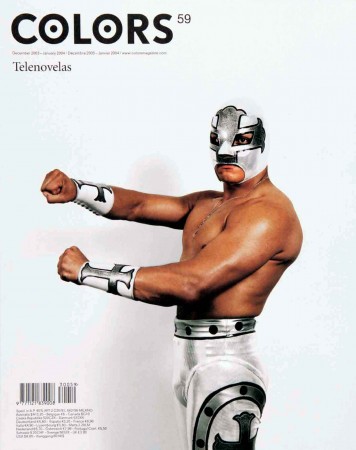
COLORS has changed, but maybe it has simply changed in order to remain true to itself, to remain faithful to that unique, great idea at its core; the positive value of diversity. These 69 covers talk in different ways about different themes – shopping, war, food, AIDS, slavery, animals, prison, Telenovelas, toys and madness. Ultimately they say exactly what they want to say.

MILESTONES

1991. 1. It’s a baby!
The birth of a baby girl represented the launching of the new magazine on the editorial panorama. The image, taken by Oliviero Toscani, had already been used for a Benetton advertising campaign and in this sense it also defined the novelty of the experiment: a magazine that, as it describes itself in the first editorial, is founded on a simple idea – diversity is good – “borrowed” from the Benetton advertising campaigns.

1993. 4. Race
The fourth issue of COLORS was also the first monothematic issue, a formula that continues today. And the theme could be no other than Race, in the singular of course. Because there is only one race, the human race. An issue that faces the theme of racism in a different, ironic way. But the British, despite their proverbial sense of humor, were angered to see a black Queen Elizabeth.

1994. 7. AIDS
For the first time the problem of AIDS was tackled clearly and directly, discrediting prejudices and spreading accurate information on prevention, without being alarmist and with a little irony (like the article about latex fashion). The issue ends with an editorial in which the image of US President Ronald Reagan, victim of the virus, is accompanied by a eulogy for the man he could have been if he had acted differently towards AIDS.

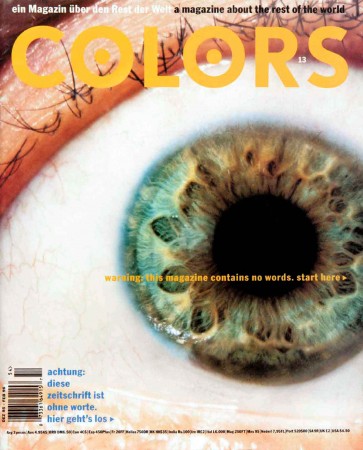
1996. 13. No Words
Tibor Kalman’s last issue, a magazine without words and a tribute to the visual vocation of COLORS.

1997. 21. Smoking
An issue all about smoking, in its different aspects: economic, social and religious. And inside a pitiful Playboy-style pin-up showing all the damage that smoking can do to the human body. A document that the World Health Organization still uses for its anti-smoking campaigns.

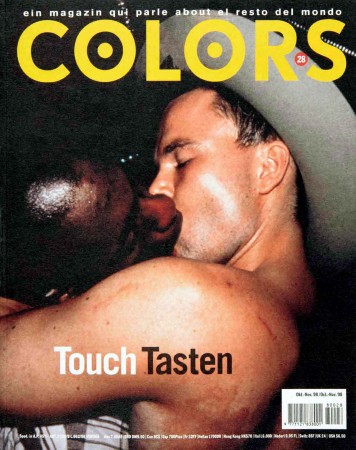
1998. 28. Touch
The image of a gay kiss introduces the issue on Touch, the most direct way in which people relate to one another. The issue shows that there are cultural differences and taboos relating to touch.

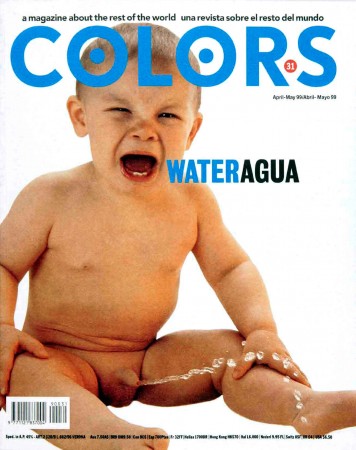
1991. 31. Water
The cover image shows a little boy urinating to celebrate the vitality of water. It was considered pornographic in Switzerland. The commission in charge of inspecting editorial products ordered that all copies of COLORS be removed from newsstands or wrapped in plastic like pornographic material.

2000. 36. Monoculture
A cover that almost made itself. A reject from a series of photos taken years before by Oliviero Toscani for a campaign promoting the UNHCR (United Nations High Commission for Refugees), representing a bloodstain and that had unexpectedly taken on the shape of Mickey Mouse. What other image could so powerfully have represented the threat of widespread monoculture that COLORS attempt to couteract?

2000. 38/39 Extra/Ordinary fashion
An unusual cover. A fashion photo taken by Patrick Demarchelier for a double issue about fashion. It was also Oliviero Toscani’s last issue. But it wasn’t a contradiction of the magazine’s core values (no news, no fashion, no famous people) rather an anthropological and visual trip through different ways people dress around the world.

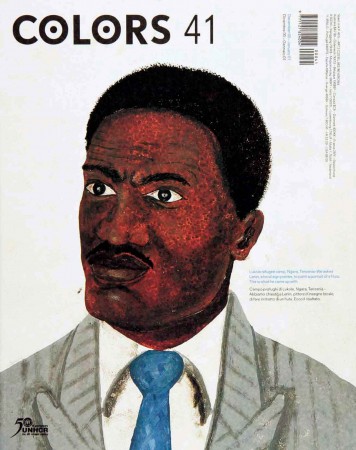
2001. 41. Refugees
The issue that launched the new course of COLORS, entirely dedicated to a refugee camp in Tanzania, and produced with the support of the UNHCR. Every photo was taken especially for the issue by the COLORS editorial team and Fernando Gutiérrez gave the magazine a new look. It was the beginning of a series on “communities”. The cover is an original illustration by a refugee who was asked to draw the typical traits of the two peoples at war, Hutu and Tutsi.

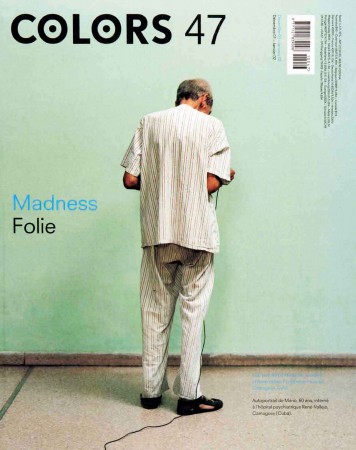
2002. 47. Madness
A self-portrait by a patient from the Camaguey Psychiatric Hospital in Cuba is the cover for an issue about Madness. Includes reports from different countries about the living conditions of people with a mental illness. From Belgium where psychiatric patients are housed with regular families to the Ivory Coast where they’re chained to trees like animals and abandoned outside villages.

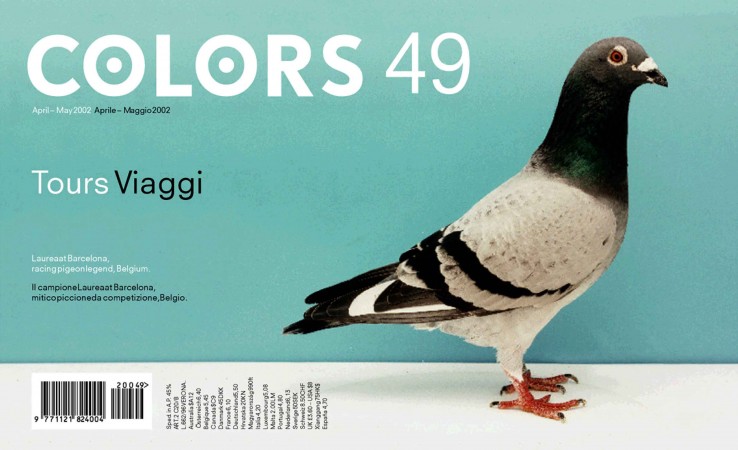
2002. 49. Tours
A special format for an issue that wants to be an alternative guidebook complete with addresses and information. Includes the Elf School in Iceland,
the Butter Museum in the Czech Republic and a favela tour in Brazil.

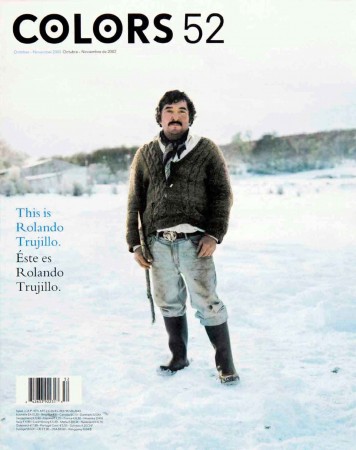
2002. 52. Trujillo
A portrait of Rolando Trujillo opens an issue about just one person. Trujillo lives by himself in remote Patagonia. This issue closes the series on communities showing an extreme one made up of only one person. The issue also confirms that COLORS gives a voice to those who don’t have one.

2003. 53. Slavery
A photo of modern slaves in a mine in India opens the issue, made in collaboration with Anti-Slavery International. It dramatically brings to light a problem that many people think is no longer relevant and shows that slaves still exist and are often closer to home than we think (for example a beautiful mansion in Los Angeles, USA).

2003. 56. Violence
The victim of a beating outside a nightclub in Johannesburg, South Africa, is the powerful image on the cover of an issue about violence. It was produced to support the World Health Organization’s Global Campaign for Violence Prevention.

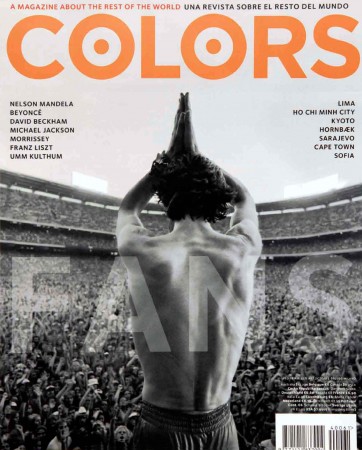
2004. 61. Fans
This issue opens the new American era, with a new editorial team based in New York. It is dedicated to fans of sports, politics, religion and music.

2005. 65. Freedom of Speech
The calligraphy graffiti of Tsang Tsou-Choi is featured on the cover. He believes he’s the king or emperor of China. The issue celebrates freedom of expression and words, helping to mark the 20th anniversary of the organization Reporters Sans Frontiers.

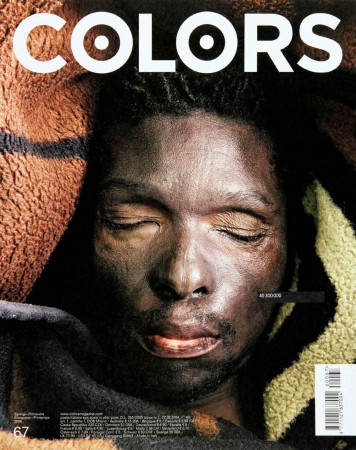
2006. 67. AIDS/HIV
Twelve years after the first AIDS issue, an update on the evolution of the problem and its new geography, with a focus on both personal stories and general issues. On the cover the portrait of Nyameka J. Matiayana, one of over three million people who died of AIDS-related causes in 2005.

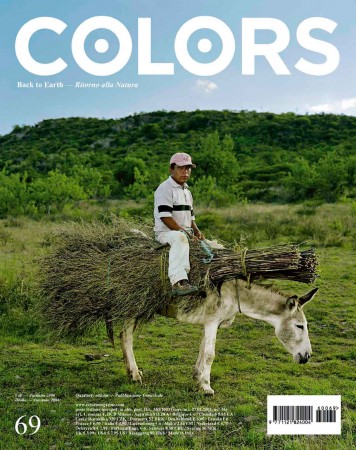
2006. 69. Back to Earth
The image of a farmer riding his mule is the symbol of an ideal return to the land and nature. It’s call for sustainable production and consumption. An issue produced in conjunction with Slow Food to support the project Terra Madre, a huge meeting of farming community representatives from around the world where ideas and experiences are exchanged.

For further information:
Italian Cultural Institute-Seoul
4Fl., ERA Bldg., 273-2 Hannam-dong,
Yongsan-ku, Seoul 140-884, Korea
Tel. 82.2.796-0634
Fax. 82.2.798-2664
E-mails:
segreteria.iicseoul@esteri.it
segreteria@italcult.or.kr