










Get ahead of the competition
Do you get out enough?
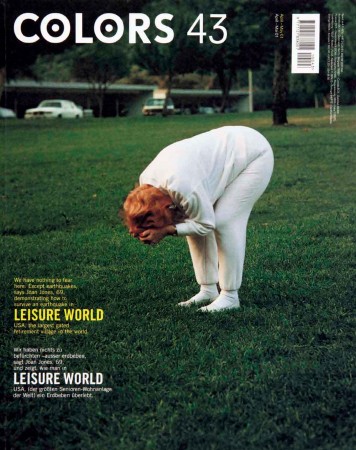
You’re probably sitting as you read this, and it’s killing you. The moment you sat down, your body stopped cleaning fat from the blood in your legs, and the electrical activity in the muscles below your waist went dead silent. Sitting for more than six hours per day doubles your risk of depression and makes you 30 percent more likely to die in the next decade. But a daily 15-minute stroll can add three years to your life, and 16 weeks of regular exercise will cure depression in 60% of sufferers. If you don’t want to end up on Prozac, stand up.
At midnight, a small ball rolls from the shadows and stops on a canyon path. Flaming torches soon emerge, illuminating a dozen running men wearing cowboy hats. They scuffle until one finds the ball in the dust, then kicks it down the canyon slope. Everyone surges after it into the dark, shouting.
Welcome to the 37th hour of a rarajipari, a traditional race of Mexico’s indigenous Tarahumara people. The running men have up to 11 more hours to go, kicking and chasing their ball along the gorges of the Barranca del Cobre. Spectators bet their own clothes on who will make it all the way to the finish line. “No one knows in advance when the race will be, who will show up, how deep a crevice a ricocheting ball may need to be retrieved from in mid-race, or who will take a midnight tumble and gash his head,” recounts Tarahumara racer Silvino in the book Going Long.
But then any event planned over drinks is bound to be a little messy. Traditional tesguino beer doesn’t keep, so when someone brews a vat, he invites friends and neighbors to a block party that only stops when there’s nothing left – sometimes days later. Etiquette requires drinking as much as possible, creating an anarchic alternate reality where the famously shy Tarahumara feel bold enough to issue race challenges.
Despite the frequent tesguinadas (anthropologist John Kennedy estimates that Tarahumara spend 100 days of the year drunk or hungover), the Tarahumara are superb athletes. Children start training for races at the age of two, and Victoriano Churro was 52 when he upset the field of the 1993 Leadville 100, a 160-kilometer ultramarathon in Colorado, USA, by finishing one hour ahead of the first non-Tarahumara. By some standards, the Tarahumara appear superhuman: a 1965 study found that rarajipari runners expend considerably more than the 10,000 kilocalories of energy a day commonly quoted as the upper limit of human effort – equivalent to burning off the energy from 72 cans of Coca Cola and still needing more. But their prowess is hard won; in 1981, anthropologists from the University of Padua observed blood in the urine of one in six Tarahumara men, and linked it to the notorious “kickball race.”
If running makes you pee blood, why not find another hobby? “Because they love it,” explains Will Harlan, a regular participant in the Tarahumara’s annual Copper Canyon Ultra race through the Barranca del Cobre. They love the “intoxicating experience of gliding across the warm earth.” Other distance runners feel it, too: Japanese Buddhist “marathon monks” believe they can reach living enlightenment by racking up 80 kilometers a day for seven years. So too, it seems, do participants in New York’s annual Self-Transcendence 3100 Mile Race, during which participants run 5,649 laps around a single city block in Queens. Harlan himself describes running the Copper Canyon Ultra as an out-of-body experience: “I wasn’t running… My legs seemed to spin beneath me without any interference from my conscious will.”
These raptures are no exaggeration. A 2004 experiment at the Georgia Institute of Technology, USA, found that just 50 minutes of hard exercise dramatically increase anandamide concentrations in blood. Anandamide is an endocannabinoid – literally, your body’s natural cannabis – and, says the study, it turns simple runs into “intense psychological experiences.” At the same time, a range of other homemade intoxicants charge through a runner’s body: endorphins block pain, norepinephrine speeds the heart, and dopamine sharpens desire.
What happens when you run
On a long distance run, your body begins to fall apart. Muscle fibers tear, dehydration makes the walls of your dry bladder rub against each other, and the repeated impact of your feet against the ground makes you bleed against your shinbones. So why keep going? Dopamine. The urge to win is the dopamine system in action. Anticipating future pleasure makes it spurt out of your substantia nigra into your nucleus accumbens, which controls emotions, and your prefrontal cortex, which controls your decisions. Dopamine is desire, and you won’t stop running until it dries up.
Other ways to boost your dopamine
CocaineCocaine makes dopamine rapidly build up in your brain, giving you a profound sense of reward without actually having achieved anything. Take too much, however, and your prefrontal cortex will become overloaded with dopamine, making you temporarily schizophrenic.
CigarettesNicotine in cigarette smoke boosts dopamine, which tells your brain it likes it and wants more. Alongside nicotine and the 4,000 other chemicals in the smoke is an unidentified substance that reduces levels of MAO-B, an enzyme that lowers your dopamine when you’ve had enough.
Cat shitToxoplasma gondii is a parasite that lives in rats, cat shit and the brains of almost all cat owners. It raises levels of dopamine, which, in rats, inhibits the ability to perceive risk. It may do the same in humans, and has been linked with schizophrenia.
BananasHow to win
Measuring physical fitness won’t predict who’s most likely to win a race. To win, competitors also need to overcome internal mental obstacles such as doubt and insecurity in order to express their talent. A 2010 study at New York’s Columbia University found that those most likely to win in competition begin with a high level of testosterone and a low level of stress hormone cortisol. Follow the steps to success below.
Where to placeWhich of these Tarahumara is least happy? An emotional analysis of Olympic athletes by Cornell University, USA, found that while gold medalists are the happiest people on the podium, those who win bronze are the next happiest. Coming second hurts. This is due to counterfactual (“what if?”) thinking: the silver medalist is preoccupied with the thought that they could have won gold, but bronze medalists are most conscious of all the people who didn’t make it onto the podium at all. In all disciplines studying happiness, who we choose to compare ourselves to is considered central to our sense of wellbeing.
The Columbia Method
1. Lower CortisolNo matter how much testosterone you have, if you’re stressed, it won’t be able to help you. Eating whole-grain foods for breakfast and avoiding coffee will help lower your levels of cortisol, the stress hormone.
2. Boost testosteroneResistance training (lifting weights) for a minimum of 20 minutes temporarily raises testosterone for hours afterwards. Eat some fish, too. High in B vitamins, it will increase your natural production of testosterone.
3. Power poseOne minute of holding a dominant pose immediately raises testosterone and lowers cortisol. To power pose: stand calmly with your chest out, arms up and hands clenched in fists.
4. WinWinning one competition will give a big boost of testosterone, making you more likely to win the next. This hormonal feedback loop eventually becomes overwhelming, and will make you take excessive risks. Try to stay calm.
